What can be submitted for assessment
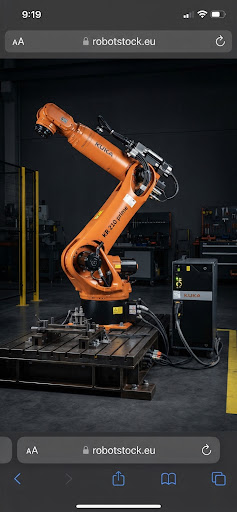
We accept submissions concerning industrial robots and robotised cells. You can describe a single unit or a set of related elements. It is important to indicate exactly what the submission covers.
- Manipulator and controller — model, generation, completeness and visible condition.
- Cell equipment — grippers, external axes, positioners and other elements related to the robot.
- A working or faulty unit — with a reliable description of faults and missing parts.
- One unit or several machines — with a list of models and locations.
Submissions may cover robots including KUKA, ABB, Fanuc, Yaskawa or Universal Robots. The make alone does not decide the further terms; the specific configuration and condition matter.
How to prepare a submission
- Photograph the whole unit. Show the manipulator, the controller and the elements to be covered by the assessment.
- Photograph the nameplates. If the robot and the controller have separate markings, photograph both.
- Describe the technical condition. State whether the unit worked before dismantling, which faults you knew about and whether it is complete.
- Give the location and access conditions. Information about the hall, the installation level and the way the unit is secured helps to discuss the further organisation.
- List the equipment. You do not need to know every name — photos and a description will help to organise the gaps.
What affects the assessment
| Area | Why it matters |
|---|---|
| Model and configuration | Defines the variant of mechanics, control and possible use |
| Technical condition | Allows the scope of further verification or repair to be assessed |
| Completeness | Missing wiring, control or attachments change the scope of the assessment |
| Service history | Helps to understand the load and the conditions of use |
| Documentation | Makes it easier to identify the configuration and earlier work |
| Location and access | Matters when planning any logistics |
Photos allow the assessment to start, but they are not always enough for a final technical opinion. If additional information or an inspection is needed, we will discuss this before further arrangements.
Terms without general promises
We do not impose one way of settling, dismantling or collecting. After the assessment we present the terms possible for a given submission. The transaction model, documents, scope of responsibility, schedule and organisation of logistics require a separate agreement.
This approach makes it possible to take account of both a single robot standing in a hall and a complex cell with additional equipment.
What not to leave out of the description
Do not hide collisions, missing elements, previous repairs or start-up problems. A reliable description reduces the number of questions and helps to prepare terms that reflect the actual condition. If you do not know something, simply note it in the message.